Construction of the White House officially began on Oct. 13, 1792, when architect James Hoban laid the cornerstone under a Masonic ceremony. The neoclassical structure was erected largely by European craftsmen and enslaved laborers who transported sandstone from Virginia quarries. By 1800, the building welcomed President John Adams and soon became known as the White House.
However, the building’s first major test came during the Burning of Washington in 1814, when British forces set fire to the residence, leaving only its exterior shell standing. Architect Hoban was called back, and by 1817 the building was restored-with the iconic south portico added in 1824 and the north in 1829.
Fast forward more than a century: under President Theodore Roosevelt in 1902, the structure underwent sweeping changes including repurposing rooms and creating the West Wing for presidential offices. And in the late 1940s, a full-scale interior reconstruction was launched under President Harry S. Truman, as the building’s infrastructure had deteriorated to the point of collapse.
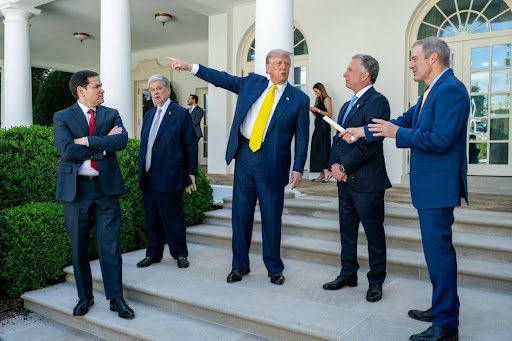
Now, in 2025, the White House is once again seeing one of its most significant transformations. The East Wing, long used for the First Lady’s offices and event planning, is being partially demolished to make way for a new 90,000-square-foot ballroom-funded by private donors and backed by Donald J. Trump. Officials say this marks the first major structural change since the Truman renovation more than 70 years ago.
From its origins as the fledgling “President’s House” of a young republic to its current status as a symbol of both history and modern power, the White House continues to embody evolution itself. The series of renovations and reconstructions reflect not only changing architectural and technological needs, but also shifting ideas about presidential residence, national prestige, and public access. The new ballroom adds another chapter to this ongoing story, highlighting how even the most storied institutions must adapt to new purposes while preserving their legacy.